Maybe The Eyes Have It?
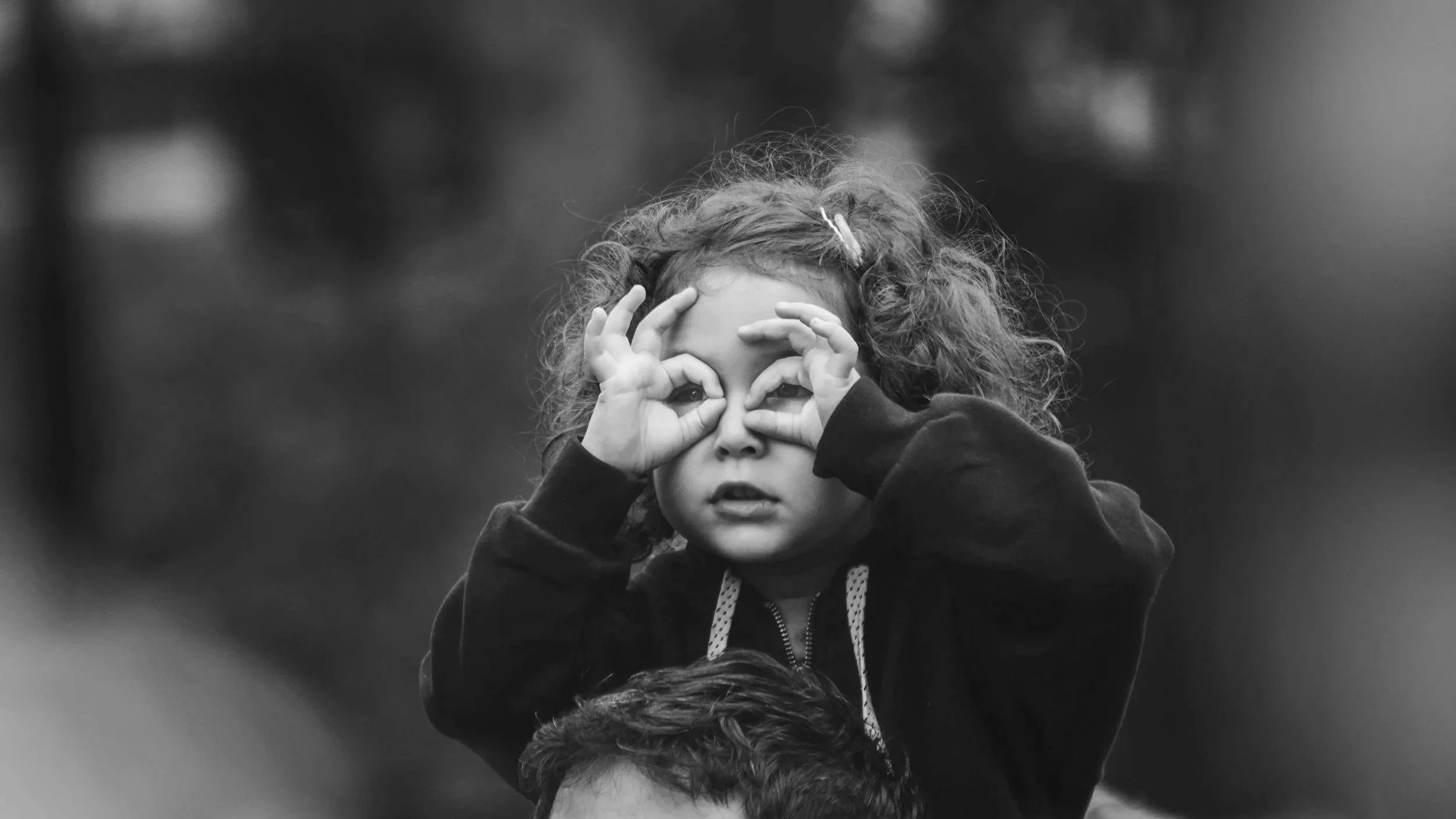
It’s referred to as the “Gen Z Stare”, a silent, vacant, awkward pause given by people of a certain age, in place of a more outward or verbal response. It’s unsettling to anyone older than that, maybe it even feels disrespectful, but I’m most interested in what’s behind the stare.
When I was their age (did I really just say that?), we had our own set of gestures, attitudes, and expressions that we flung at those older than us. I did my share of eye rolling, stomping off, slamming doors, blasting music, deep sighing, flipping the bird, and giving the silent treatment, as did my peers. These kids today (ugh, did I just say that too) didn’t invent expressions of displeasure with elders. But I don’t think that means we shouldn’t still be trying to understand what’s behind “the stare”.
You don’t fight your way through The Louvre just to shrug and concede that Mona Lisa was politely posing for someone. You pause and ponder what’s behind her expression. You wonder what she was trying to convey, what da Vinci was trying to convey in capturing her bemused smirk in his work. There’s a message in her gaze, and I think if we take a beat and think about it, we’ll find that there’s important information in the “Gen Z Stare” too.
They’re trying to tell us what it’s like to be them, to be here, right now. They’re giving us subtle, maybe unintentional clues about what’s hard, what’s frustrating, what’s scary. I wish someone had thought to ask me what was behind my teenage ire, all those years ago, so I’m going to do our current youth that courtesy.
I don’t think it’s ever been easy to be young. If we pick through history, we find that childhood wasn’t really a thing at all until relatively recently. A human was a screaming, squishy blob for a while, and then they were big enough to work and contribute, so they did. Even then, childhood was for the privileged. It was dependent on gender, social class, race, and a bunch of other factors. If you fit into a certain category, and if Mom and Dad had cash, you could be silly for a little while longer than others. School, toys, cute clothing, extracurriculars, and fun food were far from guaranteed. Basic rights and freedoms were far from guaranteed. If you didn’t survive long enough to fully mature, those around you might be disappointed, but they probably weren’t altogether surprised. It has been, historically speaking, a struggle for humans to get their heads around what it means to be a child or youth, and an even bigger struggle for us to figure out how we feel about young people.
In many senses, being young might now be easier for many, but not everywhere, and not for everyone. I do think, in other ways, it might be much harder at the moment, compared to how it was for the past few generations. Before you get defensive and say the things you swore you’d never say when you got older, just let me explain.
This is not an easy time or place to be young. There’s a laundry list of present challenges that includes ongoing plagues, growing inequity among genders/races/abilities, profound economic insecurity, environmental destruction, a rise in fascism, as well as cuts to education, healthcare, and any institution intended to protect and nurture our young. Grown-ups who are in the practicing of raising, teaching, or advocating for children are often also lacking in support and resources. There’s no glory in bringing up the next batch of humans.
And that’s on top of all the usual nonsense about being young. We still criticize immaturity, while worshipping youthfulness (ahem, botox). We still insist these are the best years of a human’s life, while saying things like “You couldn’t pay me to go back.” We haphazardly create and sell new technology, and criticize young people for adapting to it. We still insist that no one is ready to participate in the making of important decisions until they’re older, while we simultaneously generate new problems for them to inherit.
The worst of it is that this current generation of newbies knows all about this. They’re watching, and they get it. They’re plugged in, switched on, and aware of it in ways that no generation before them has been. We stick it all right in front of their noses, and then tell them to sit down and be quiet about it, to pretend it’s okay. All these centuries later, all this progress in so many areas of human existence, and we’re still blurry and confused about the needs, desires, thoughts, feelings, and rights of those who are just getting started in life. We still just don’t get them, even having been them. It’s like a butterfly emerging from its cocoon and thumbing its nose at every caterpillar it sees.
So yeah, Gen Z has taken to silently staring at us. We’ll be lucky if the stare is all we get, if they can muster enough restraint to hit us with passive aggressiveness, instead of aggressive aggressiveness. Do we still deserve access to their inner lives, their thoughts, their feelings, if we refuse to acknowledge that they have them, or that they’re important? The stare could be about harnessed rage and fury. It could be the silent pondering of existential absurdity. It could be them mentally cataloguing all the things in their lives that are still joyful and worthwhile. It could also be that they’re just quietly waiting us out, saving their voices and their energy for a time in the future when they’ll have to do an unthinkable amount of clean-up.