How Do We Like Them Apples? Please Ask A Philosopher.
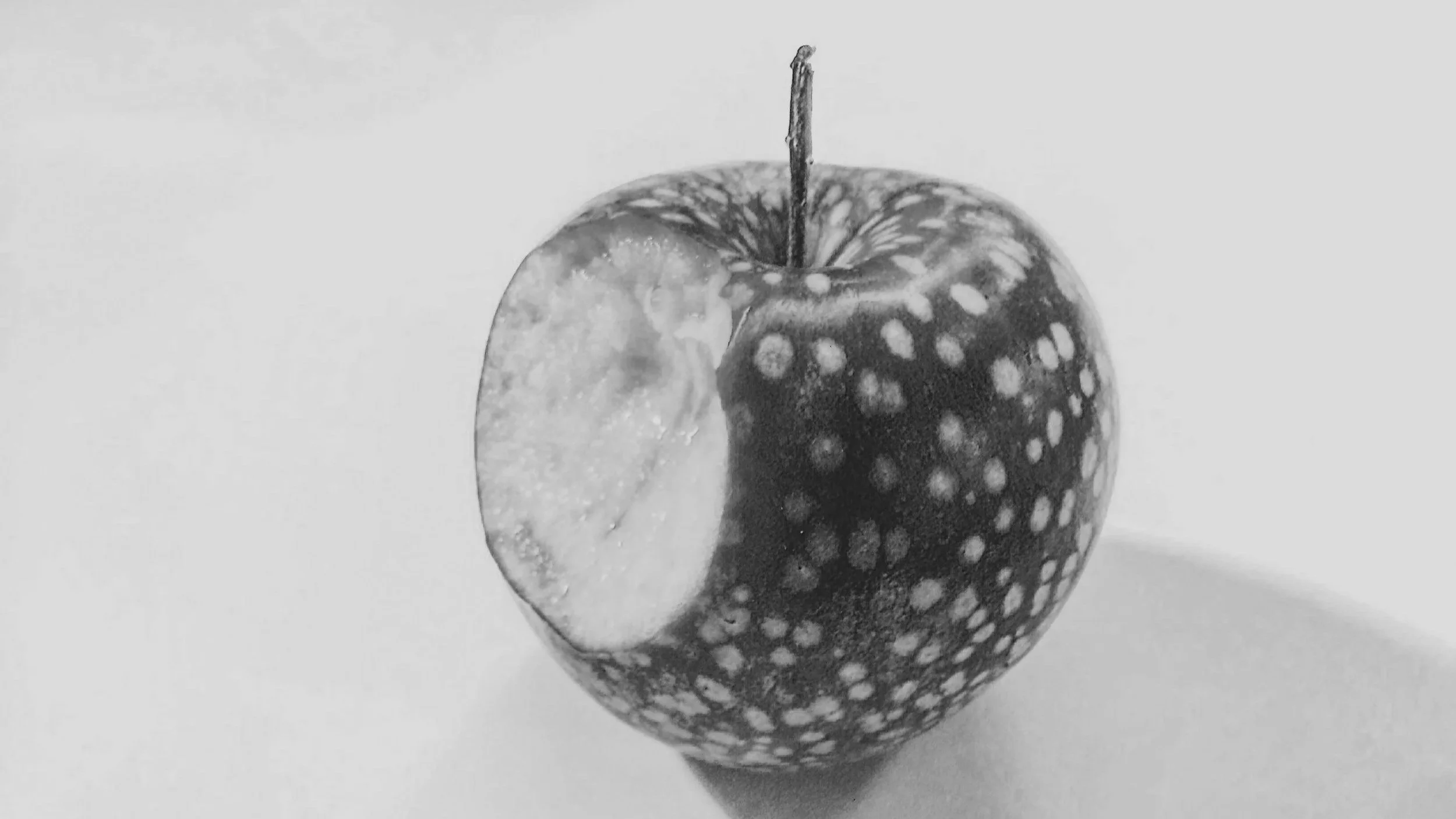
“No more apples in the vending machine, please.”
It was a simple request from Homer Simpson to his employer, but it is also an apt description of what ails us in our particular timeline. We can think of the internet, our lives online, and all the stories and information we have amassed, as one giant vending machine. Presently, the oily, starchy, sugary nonsense is abundant, cheap, and readily available. While there may be a vitamin or two hiding in it, maybe a scrap of fibre here and there, it’s designed to address cravings, to serve as quick relief and instant gratification. We like this junk, with its glossy packaging and superb convenience. And we don’t like apples…right?
And why would we prefer apples? Why wouldn’t we be shocked and a little appalled to see them snuck in with the other goodies? Apples are the last part of the lunch to get eaten. They’re what you fish out of the back of the fridge when all the good stuff is gone. Apples require washing and polishing. Some of them have bruises and dents. Eating an apple is a conscious decision, not just a whim. Apples require us to think of what will be best in the long run.
When I started doing philosophy for kids, I did so with Homer’s statement written on my forehead in invisible ink, but stubbornly, and with the “no more” crossed out. It was humbling (still is) to know that the stuff I was writing and producing probably wouldn’t be popular. Presented alongside sparkly princesses, scary aliens, and games that focused on blowing stuff up, the shiny, branded, recognizable goodies, my work would likely be pretty much invisible. Very few children, parents, or educators were going to “crave” philosophical content like the stuff I was producing.
But I like apples. I like the challenge of apples. I was bolstered by the fact that although my stuff wasn’t as generally consumable, it would be important and helpful. It still deserved to be there, to at least be an option. If I did my job, it would still be tasty and satisfying to anyone who decided to take a chance and choose it. At the end of the day, apples are actually quite nice. Very palatable. And so is philosophy (for real).
I think providing metaphorical apples is a huge part of any philosopher’s job, and I don’t think, in all the thousands of years we’ve been doing what we do, we’ve ever been the thing people reach for, not at first, anyway. Plato’s “vending machine” was a cave, with delightful, appetizing shadows on offer. Kant described bracing oneself against a vast ocean of “semblance and illusion”. Hannah Arendt explored “the banality of evil” and bell hooks spoke of “shared ignorance”. I guess this is what we sign on for when we get into this field. We accept that we’re going to be forever trying to sneak in a nugget or two of something with more substance, and that for the most part, people are still going to opt for what’s convenient and pleasant. That’s basically the job.
I think philosophers share this with artists and creatives. If you’re really lucky, your stuff will ring true with a wider audience, and you’ll get noticed, but it’s more likely that you’ll be offering something genuine and enriching, but largely overlooked. In order to really “make it” a lot of artists have to resort to fluff, when they have much more nutritious ideas to offer. As Bette Midler puts it “You know, modern painting is supposed to be the panacea for all the ills of modern life, and yet everyone still buys the painting that matches the couch.”
I fear that scientists face the same challenges. Their apples have been tested, documented, compared and shared, and explained in a myriad of accessible and interesting formats. But, thousands of years into this science stuff, they’re still having to contend and compete with Earth being flat, dinosaur bones being clever fakes, and the notion that being sick all the time makes you less likely to be sick all the time. Some of the brave souls in this field aren’t merely ignored, but are even accused of adding fake or poison apples to the melange.
It’s sheer hubris to think that something a philosopher, an artist, or a scientist puts into the universe is going to suddenly cause a massive course correction, or revamp an entire system. I don’t think anyone changes the world, or changes people’s minds, on their own, in one fell swoop. Most of us who work with apples are happy to think that we’re contributing to a bigger, long-term shift with our tiny substitutions. We’re confident that our apples are really good apples, and we’re happy to sneak them in whenever and wherever we get the opportunity. If we’re lucky, maybe we get to leave a few at a time. Maybe we run into someone else who deals in apples, and we give each other a thumbs up. If everything goes really well, maybe the apples we leave actually help people to learn how to use the vending machine more effectively, to think carefully about what they choose next time, to gradually lose their taste for the junky stuff. Maybe the apples we leave might even encourage someone to avoid the vending machine altogether, and to pick or plant their own.